
Sliding Sash Windows in Ely
Infinite Door Solutions fits spring balanced sash windows in Ely, in uPVC and aluminium, with sealed double glazed units. We’re Assure certified, and the price is fixed once the survey’s done.
- Assure Certified
- 15+ Years in the Trade
- Free Quotes
- Ely & Cambridgeshire
In Short
Sash windows in Ely in uPVC and aluminium, fitted from our base on Oak Lane in Littleport.
Spring balanced as standard on every uPVC and aluminium sash we fit, so there are no weights or cords to snap.
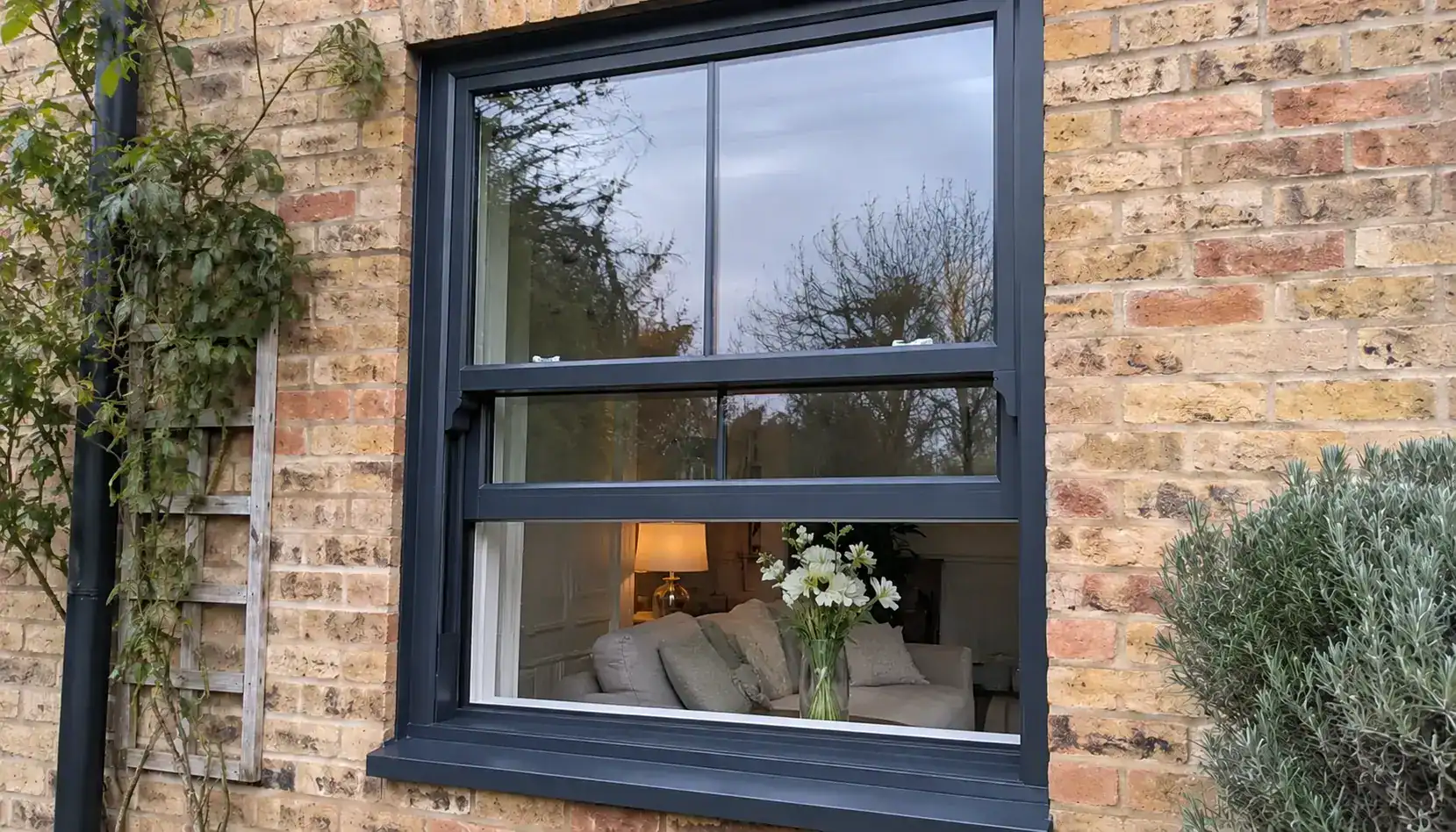
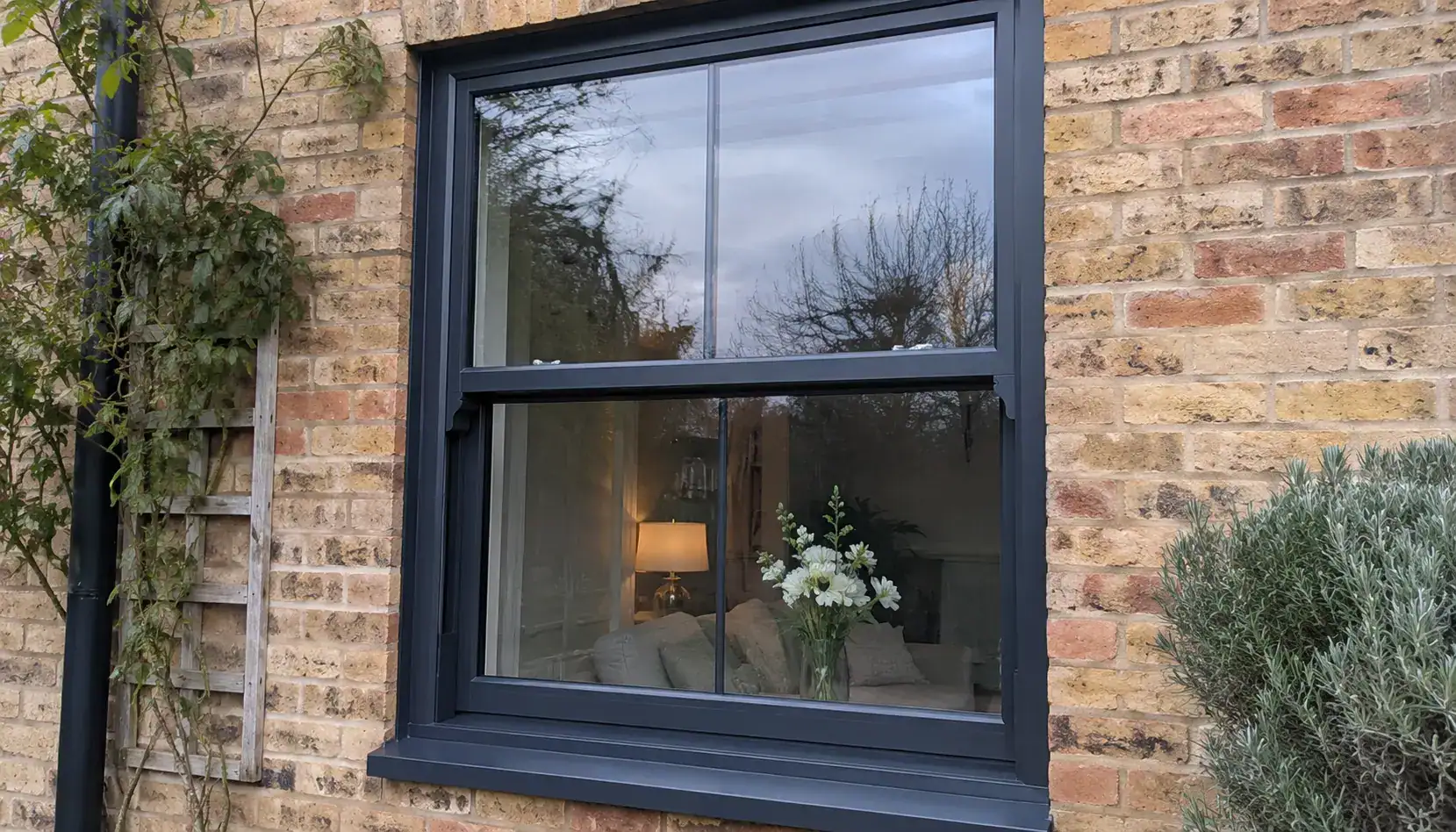
Wood effect and colours: woodgrain foil on all uPVC, and anthracite grey is the most asked-for aluminium colour.
Assure certified, with an insurance-backed guarantee on new windows and the Building Regulations sign-off handled for you.
Free, no-obligation quotes: send a photo on WhatsApp for a ballpark, Monday to Friday, 8am to 5pm.
What's Covered on This Page
- uPVC and Aluminium Sliding Sash, Never Timber Restoration
- Conservation Areas and Listed Buildings Change the Decision
- Building Regulations and Self-Certification Explained
- What Happens from Survey to Fitted Sash Windows
- Signs It's Time for Sash Window Replacement Rather Than Repair
- Questions About Sash Windows in Ely
uPVC and Aluminium Sliding Sash, Never Timber Restoration
We fit new sliding sash windows in uPVC and aluminium. We don’t fit new timber sashes or restore old ones, so if keeping your original timber windows matters to you, a specialist joiner is the right call. If you’re in a listed building or a conservation area street in central Ely with extra rules on how windows look, secondary glazing is usually the better answer.
We’d rather say this up front than waste your time. We fit new windows in uPVC and aluminium, never new timber. That goes for sash windows too.
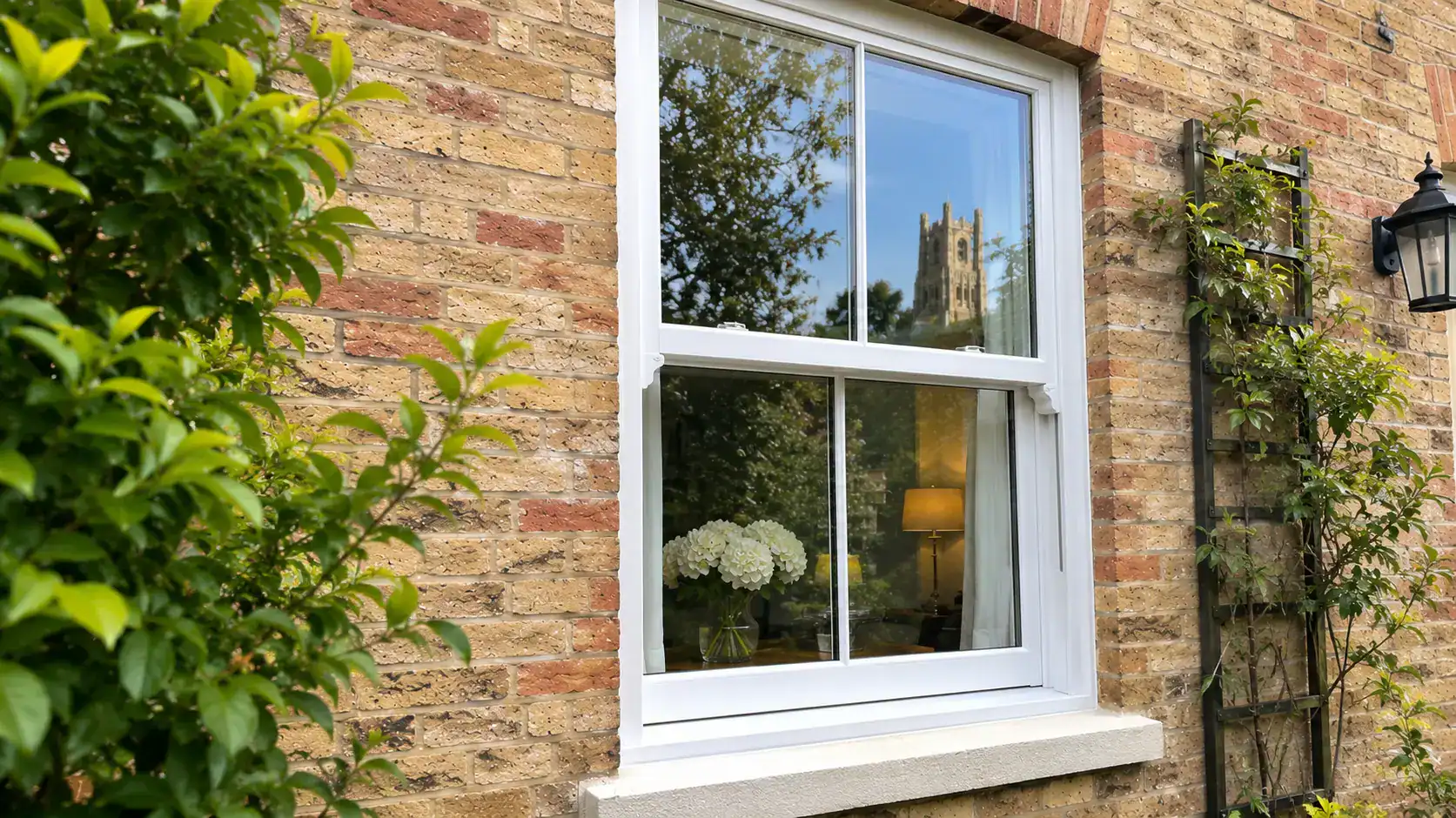
So what we’re offering is replacement. The old sashes and frame come out, and a new uPVC or aluminium sash window goes in that slides up and down the same way your old one did. It keeps that traditional look from the street. You just don’t have the painting, the sticking in damp weather or the rattling in the wind.
It doesn’t suit everyone, and that’s fine.
- If your timber sashes are sound and you’d like them kept, you want a joiner who does sash restoration. Things like new cords, a spot of rot cut out and refilled, or draught strips fitted to the timber are their kind of work, not ours. If it’s only the glass that’s gone and the frame is sound, we can re-glaze an existing timber sash with the frame left in place.
- If the house is listed, the original windows are usually part of what’s protected. Swapping them for uPVC or aluminium is very unlikely to be allowed, so we wouldn’t suggest it.
- If you’re on one of the conservation area streets in central Ely, there may be extra rules on changing how your windows look from the street, so a new uPVC sash may need the council’s say-so first.
For those last two, we can still help, just in a different way. Secondary glazing goes on the inside of the windows you’ve already got, so nothing changes from the street. It sorts out a lot of the cold and the noise without touching the original sashes. On a listed house it’s still worth checking with the council first, as consent can cover changes inside too.
When a New uPVC or Aluminium Sash Makes Sense
Round Ely, sash windows are mostly found in the older parts of the city. Newer houses tend to have casements, though some new builds use uPVC sliding sashes to keep the period character.
Where uPVC or aluminium sash really does make sense is a house outside those restrictions with sashes that are past saving. Say the bottom rails have gone soft, the cords have snapped more than once, and you’ve painted them so many times they won’t open. At that point you’re paying to keep something going that’s had its day. A new sash window gives you the same shape and none of the upkeep.
Every uPVC and aluminium sash we fit is spring balanced, with the balance hidden in the frame instead of the old weights and cords, so there’s nothing to snap or rot away. The glass is sealed double glazed units rather than single panes, which makes a real difference in an Ely winter.
Not sure which side of the line you’re on? That’s what the survey is for. Dan will look at what you’ve got, and if he thinks your sashes would be better off with a joiner, or that your street means secondary glazing is the way to go, he’ll tell you. You deal with Dan from the first quote through the survey to installation, with a trusted team of installers behind him on larger jobs.
Not sure if a new sash is right for your house?
Send us a photo on WhatsApp and we’ll give you a ballpark.
Conservation Areas and Listed Buildings Change the Decision
The first thing to find out is what your house is, before anyone talks about frames or colours. A lot of people in Ely aren’t sure, and that’s fair enough. It isn’t always obvious from the outside.
There are two separate questions, and they’re worth keeping apart.
- Is the building listed? That’s about the house itself. Historic England keeps the national list, and you can search it by address.
- Is the street in a conservation area? That’s about the area, not your house. East Cambridgeshire District Council’s planning team can tell you, and they’ll know if there are any extra rules on windows for your road.
A house can be one, both or neither. A newer house can sit inside a conservation area without being listed. An old cottage can be listed out in a village with no conservation area at all. The answer changes what’s allowed, so it’s worth five minutes on the phone or online.
There’s one thing people mix up all the time, and we think it catches a lot of homeowners out. Replacing windows is notifiable work under the Building Regulations. We’re Assure Certified, so we self-certify that side of it instead of you going through the council. But that sign-off is about the window doing its job properly, things like heat loss and safe escape. It isn’t planning permission, and it isn’t listed building consent. Those are a different conversation with the council, and nobody can tick them off for you.
So if anyone tells you their paperwork covers you on a listed house, we’d be careful. It doesn’t work like that.
The Grey Areas
Then there are the grey areas. Your house might sit just outside a conservation area boundary, a street or two off the protected bit. Your windows might face a back garden that nobody sees from the road. Next door might already have uPVC, and you’re wondering why you can’t. We can’t give you a blanket answer for any of those. The rules can vary street by street, and what a neighbour got away with years ago isn’t a guide to what’s allowed now. Ask the council first and get the answer in writing if you can.
The order matters. Check your status, then talk to the council if there’s any doubt, then book the survey. Doing it the other way round is how people end up paying for windows they’re later told to take out. That’s the last thing we want for anyone.
If it turns out you’re in the clear, a uPVC or aluminium sliding sash is a straightforward job. If it turns out you’re not, Infinite Door Solutions can still help keep the house warmer and quieter, just with a different product from the one you came for. Either way, you’ll know where you stand before anything gets ordered.
If a sash isn’t the right fit, see the full double glazing range for the other window styles we fit.
Building Regulations and Self-Certification Explained
We touched on self-certification above. Here’s what it means for your windows, and why it matters more than it sounds.
The Building Regulations don’t care what colour your frames are. They care whether the new window does its job. On a sliding sash, there are a few things that need to be right.
- Keeping the heat in. A new window has to meet today’s standard for heat loss, not the standard from when your house was built.
- Getting out in a fire. Upstairs bedrooms usually need a window big enough to climb out of.
- Safety glass where it’s needed. Low panes and glass close to a door generally need glass that won’t break into sharp pieces.
- Fresh air. Swapping old draughty sashes for sealed ones shouldn’t leave a room with less ventilation than it had before.
The escape one is worth a bit more thought on a sash. A sash only opens half at a time, top or bottom. So a window that looks big from the outside can have quite a small gap when it’s open. That’s fine in a lounge. In an upstairs bedroom, it’s the one thing that most often needs checking before anything gets ordered. Cambridgeshire Fire and Rescue Service’s home escape plan advice counts a first-floor window as a way out if your usual route is blocked, so that gap matters.
The same goes for that fresh air point. Old timber sashes leak air round every edge, which is half the reason they’re cold. Once that’s gone, a room can feel stuffy or get condensation on a damp Ely morning unless there’s another way for air to get in, such as a small vent in the frame. The Glass and Glazing Federation’s guide to Approved Document F explains why most replacement windows now need a trickle vent like this.
So that’s what gets checked. Because we’re registered with Assure, we can sign that work off ourselves. You don’t need to book a council inspector, and you don’t pay the council a fee for it. New windows we fit also come with an insurance-backed guarantee.
The Certificate You’ll Need When You Sell
The bit people forget is the paperwork afterwards. When work is self-certified through a scheme like Assure, the homeowner is normally sent a certificate to say the windows meet the rules, and the council is told about the job. Pop it in a drawer and forget about it until you sell.
Then you’ll need it. A buyer’s solicitor will usually ask for proof that replacement windows were signed off. If there’s nothing to show, it can hold up the sale, or you can end up paying for an insurance policy or a late sign-off to cover the gap. It’s a silly problem to have over windows that were fitted properly in the first place.
It’s also worth knowing it’s your house the rules attach to, not the installer’s. If windows go in that don’t meet the regulations, it’s the homeowner who can be asked to put it right.
So whoever you get to quote, in Ely or anywhere else, it’s fair to ask a couple of plain questions.
- Are you registered with a scheme that lets you self-certify windows?
- Can I check that on the scheme’s public register?
- Will I get a certificate once the job’s done?
We’re on the Assure installer register, and anyone can look us up there. If an installer goes vague on any of those three, we’d take that as your answer.
What Happens from Survey to Fitted Sash Windows
Once you know a uPVC or aluminium sash is right for your house, the job itself is a fairly plain run of steps. Dan’s the one you talk to at each of them, so you’re not passing messages between people.
First, the survey. Dan will pop round, measure each opening and check the frame that’s in there now. On older houses in Ely, openings are often a little out of square. That gets measured properly, because a sash that’s made to a guess won’t slide right.
There are a few other things worth looking at on a sash in particular:
- The sill, and whether it’s sound or needs replacing along with the frame.
- Upstairs bedrooms, where the open gap needs to be big enough to get out in a fire, as covered above.
- Fresh air, and whether a small vent in the new frame makes sense for that room.
- The look you’re after, such as the colour (anthracite grey is the one most people ask for on aluminium) and whether you’d like a woodgrain foil on uPVC.
Then you get a quote. The price is fixed once the survey’s done. Nobody’s going to ring you on Friday with a deal that runs out on Monday. Take it away, have a think, and get another quote if you want one. That’s completely fair.
If you go ahead, the windows get ordered. Sash windows are made to measure for each opening, so there’s always a wait between ordering and fitting day. How long depends on the maker and the time of year. You’ll be told when the date’s booked, so you’re not left guessing.
Fitting Day
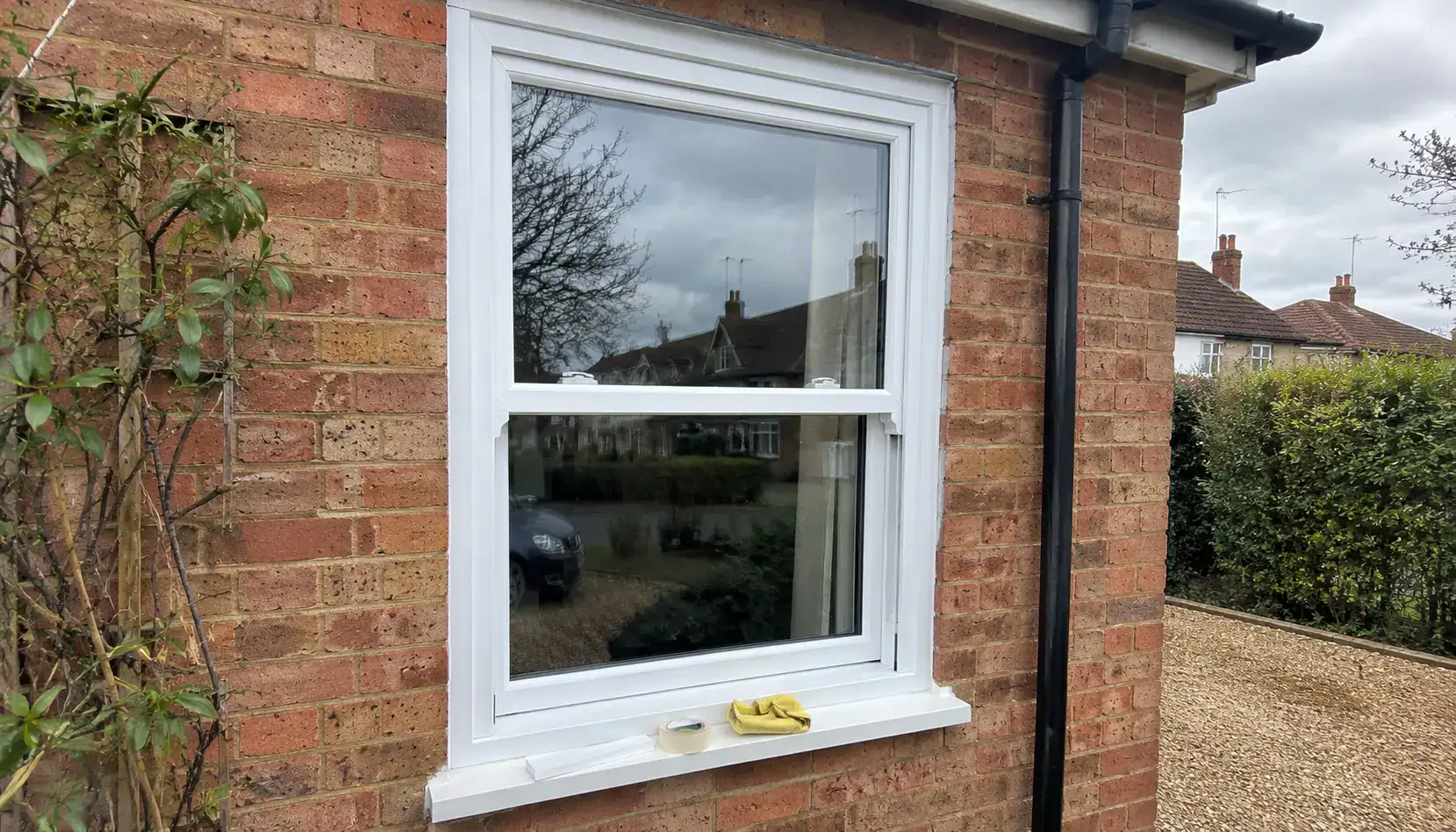
On fitting day, the old sashes come out, then the old frame. Old timber sash frames can be bedded in quite firmly, and taking them out can sometimes crack a bit of plaster around the edge. We’d rather tell you that now than have it come as a surprise. The new frame goes in, gets fixed and packed, and is sealed on the outside. Then the inside is trimmed and tidied so it looks finished.
Before anyone leaves, every sash should be slid up and down, locked and unlocked, and checked that it stays put wherever you leave it. That’s the bit you’ll notice every day, so it’s worth getting done properly.
After that, the Assure certificate follows in the post for your drawer, as explained above. If a sash ever feels stiff or isn’t sitting right once you’ve lived with it a while, tell Dan. Same person you spoke to at the start.
If you’d like Dan to pop round and measure up for sliding sash windows in Ely, give us a call or drop us a message, Monday to Friday, 8am to 5pm.
Signs It's Time for Sash Window Replacement Rather Than Repair
Not every tired sash window needs pulling out. We’d sooner tell you a repair will do than sell you something you don’t need. The quick test is whether the problem is in a part of the window or in the frame itself.
These are usually repair jobs, not new windows:
- Fog or water between the two panes. The glass is fine, the seal has gone. A new sealed unit goes into the frame you’ve already got.
- A uPVC sash that won’t stay up or slowly drops. That’s often the balance in the frame wearing out. It’s a part, not a whole window.
- A lock or handle that’s stiff, loose or broken.
- A draught at one spot, such as along the bottom or one side, where a seal has worn or come away.
- A single cracked or broken pane.
If that’s all that’s wrong, a repair is cheaper and quicker. Your window will carry on for years yet.
Replacement starts to make sense when the frame is the problem, or when the small jobs keep coming:
- The frame is cracked, bowed or twisted, so the sash catches or sticks in more than one place.
- Several windows have misted at once. You’d be paying to fix them one by one across the house.
- The same window has already been fixed two or three times and it’s playing up again.
- Older uPVC sashes have gone yellow or brittle, and the frames feel cold to the touch in winter.
- Parts for that make of window can’t be found any more.
- The draught comes in all the way round the frame, not just from one spot.
Then there’s the heating. Our winters out here are cold and exposed, and October to January is when an old window really shows. If your sealed units are well past ten years old, which is around when they usually start to fail, and you’re feeling cold spots by the glass in every room, it’s worth weighing up what you’d spend fixing them against what new double glazed sashes would save you. We can’t give you a figure without seeing the house. But it’s a fair sum to do.
Our rough rule is this. If the frame’s sound, repair it. If the frame’s gone, or you’re fixing the same windows every winter, replace them.
And if you’re not sure which side you’re on, that’s fine. It’s an easy thing for Dan to tell on the survey. If a repair will sort it, that’s what he’ll suggest.
Questions People Ask
Questions About Sash Windows in Ely
Can I keep the look of my old timber sash windows if I switch to uPVC?
Yes, a uPVC or aluminium sliding sash is made to keep that traditional look from the street, sliding up and down the same way your old timber one did. On uPVC you can also have a woodgrain foil finish if you’d like a wood effect. You get the same shape and sightline without the painting or sticking that comes with timber.
How long does it take to get new sliding sash windows fitted once I order?
There’s always a wait because sash windows are made to measure for each opening, and how long that takes depends on the maker and the time of year. You’ll be told the fitting date once it’s booked, so you’re not left guessing in the meantime. Fitting day itself covers removing the old sashes and frame, fitting the new one, sealing, trimming and checking every sash slides and locks properly.
Will fitting new sash windows damage the plaster around the frame?
It’s possible, because old timber sash frames can be bedded in quite firmly, and removing them can sometimes crack a bit of plaster around the edge. It’s worth knowing this before fitting day so it isn’t a surprise. Dan will talk you through what to expect for your house at the survey.
Do I need to do anything for ventilation once my old draughty sashes are replaced?
Possibly, since sealed sash windows stop the draughts that old timber sashes let in round every edge. That’s good for warmth but can leave a room feeling stuffy or prone to condensation on a damp morning unless there’s another way for air to get in. This is checked at survey stage, and a small vent built into the new frame is often the answer for that room.
How much do uPVC and aluminium sash windows cost in Ely?
It depends on how many windows you need, their size, and whether you go for uPVC or aluminium, so the quickest way to a figure is a photo on WhatsApp for a ballpark. Once the survey’s done, the price is fixed and won’t move. Every price we give is plus VAT.
Do new sash windows come with a guarantee?
Yes. Every new uPVC and aluminium sash window we fit comes with an insurance-backed guarantee, and because we’re Assure certified, the Building Regulations sign-off is handled too. If a sash ever feels stiff or isn’t sitting right, tell Dan and he’ll come and take a look.
Ready to swap tired sashes for spring balanced uPVC or aluminium?
Dan will pop round, measure up and fix the price once the survey’s done.